
Minnesota Golf Hall of Fame Names 2025 Inductees
EDINA, Minn. (August 29, 2025) – The MGA-PGA Minnesota Golf Hall of Fame has announced its 2025 Class of Hall of Fame inductees: Bruce Anderson, Dick...
If you've ever strolled down the fairway in Minnesota during that perfect stretch in early June—when the courses finally shake off winter and the fairways are impossibly green—you know what it means to be part of something larger than a single round. It’s a community of athletes, with varying skill levels and a unified passion for time with friends, exhilarating scenery and the shots that always bring you back. From the weekend warriors, to the club champions, to the legends who carried our state's name to the biggest stages in golf.
For 125 years, the Minnesota Golf Association has been the keeper and curator of those memories and that tradition. Not as a distant observer, but as the organization that's woven together every thread of Minnesota golf—from the Sunday afternoon player to the major champions, from the early pioneers who literally built this game in the Upper Midwest to the rising stars competing today.
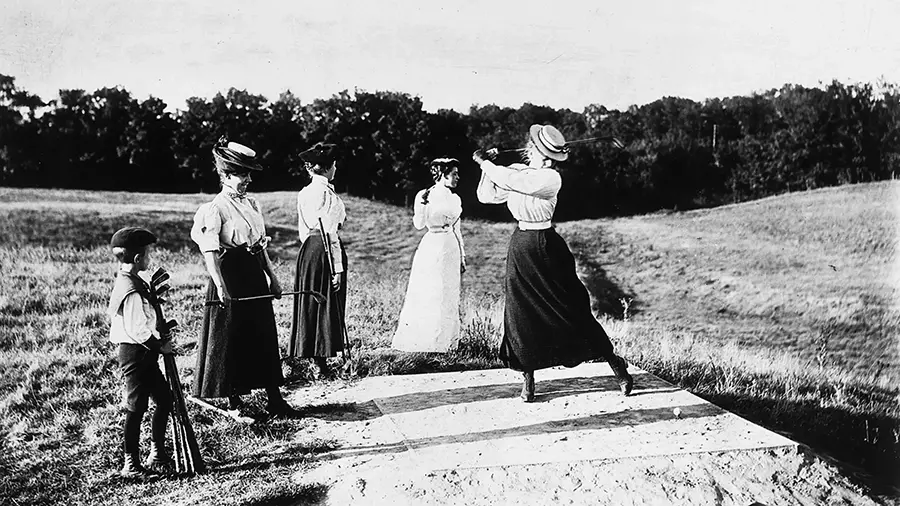
When the MGA was founded in 1901 by seven charter clubs, golf in Minnesota required a certain determination. Think of it. The season was short. The game was unfamiliar. But Minnesotans built it anyway, course by course, tournament by tournament.
Harry Legg embodied that era's spirit. A Minikahda Club member, Legg won the Minnesota State Amateur 10 times between 1905 and 1922—a stretch of dominance that's never been matched. He won five Trans-Mississippi Amateur titles when that championship meant something nationally. In 1925, he became the first amateur to beat the professionals and win the Minnesota State Open, proving our golfers could play anywhere. Harrison "Jimmy" Johnston took it further, winning the 1929 U.S. Amateur and becoming the first Minnesotan to capture a championship that then carried the same weight as the U.S. Open itself.
These weren't just golfers. They were more Minnesotans who just happened to play golf. These were not specialists, but multi-sport athletes who skated in winter and played golf in summer. They understood that golf excellence in Minnesota required adapting to our climate and our circumstances. The MGA documented their achievements, organized their competitions, and ensured their legacy wouldn't be forgotten.
Every Minnesotan who's ever picked up a club knows Patty Berg's name. A Minneapolis native who was mentored by University of Minnesota coach Les Bolstad, Berg didn't just win championships—she pioneered women's professional golf. As a founding member and first president of the LPGA, she transformed the game from a pastime into a profession.
Her numbers remain staggering: 15 major championships, 60 professional victories, the first-ever U.S. Women's Open title in 1946. But Berg's real legacy was opening doors. Every woman who's played competitive golf since owes something to what Berg built. The MGA recognized her greatness early, celebrating her amateur championships in the 1930s before she rewrote professional golf's record books. When she entered the World Golf Hall of Fame in 1974, Minnesota golf had its first immortal.
For many of us, Tom Lehman is Minnesota golf. An Alexandria native who worked his way through every level of professional golf, Lehman embodied Minnesota character: steady, resilient, never flashy, always competitive. His 1996 Open Championship victory at Royal Lytham made him our most successful male professional, but that single major hardly captures what Lehman meant to Minnesota golf.
He won five PGA Tour titles and 35 professional events worldwide. He became the only golfer ever to reach No. 1 in the world on the PGA Tour, the Ben Hogan (what is now Korn Ferry) Tour, and the Champions Tour—proof that Minnesota tenacity translates across decades. As the 2006 U.S. Ryder Cup captain, he brought that same quiet intensity to leading an entire team. The MGA had tracked Lehman's career since his amateur days, understanding that Minnesota was watching one of our own compete on golf's biggest stages.
Tim Herron, the Wayzata native we all know as "Lumpy," came from Minnesota golf royalty—both his father and grandfather competed in U.S. Opens. His four PGA Tour victories and more than $19 million in career earnings made him one of our state's most successful professionals, but Herron has always felt accessible. He was the guy who won the 1992 Minnesota State Amateur, made the Walker Cup team, then proved he belonged with the world's best. When Lumpy made it, we all felt like we made it too.
Hilary Lunke authored one of golf's most improbable championship stories. The Edina native qualified for the 2003 U.S. Women's Open through local and sectional qualifying—something no Women's Open champion had ever done before or since. Then she won the whole thing. It was classic Minnesota: no shortcuts, just talent and determination, proving that pathways to greatness don't require pedigree or privilege.
What connects Harry Legg's amateur dominance in 1910 to Tom Hoge's PGA Tour consistency today? What links Patty Berg's LPGA founding in 1950 to Isabella McCauley breaking University of Minnesota scoring records in 2025? The answer is the MGA—documenting, organizing, celebrating, and preserving Minnesota golf across every era and every level.
The MGA has been there for all of it. When John Harris won the 1993 U.S. Amateur at age 41 after starring in hockey for the University of Minnesota. When Solomon Hughes Sr. broke racial barriers in the 1940s and 50s, winning the National Negro Open and helping integrate the game at the local and national level. When Erik van Rooyen came from South Africa to play for the Gophers, won the 2012 Minnesota State Amateur, married a Minnesotan, and built a PGA Tour career while keeping his ties to our state.
Rising professionals like Caleb VanArragon of Blaine are building impressive credentials on the Korn Ferry Tour right now, carrying forward a tradition that stretches back 125 years. The MGA has charted every step—from junior golf through state championships to professional success—just as it did for Lehman, Herron, and everyone who came before.
Minnesota golf has always had its own character. We play in conditions that would send golfers in warmer climates back to the clubhouse. Remember when the Golden Gophers Men’s Golf Team won the NCAA National Championship in 2002? A team from the Upper Midwest winning it all? Unheard of until then. Our season is compressed, which makes every round matter more. We've built a community that values grit over flash, consistency over brilliance, and belonging over exclusivity.
The MGA hasn't just observed this tradition—it's protected and nurtured it. For 125 years, it's been the organization ensuring that Minnesota golf remains for everyone. That the weekend player, the touring professional, and the adaptive golfer all have a place. That the game's history gets preserved and its future gets built. That being a Minnesota golfer means belonging to something that transcends any single round or any single season.
Every time you tee it up in Minnesota, you're part of this legacy. You're playing the same game Legg mastered, the same game Berg revolutionized, the same game Lehman carried to an Open Championship. You're connected to every Minnesota golfer who came before and everyone who'll follow.
That's what 125 years means. Not just championships and records, but an unbroken community of Minnesota golfers who understood that this game—our game—is worth preserving, celebrating, and sharing with everyone who wants to be part of it.
The MGA has been the keeper of that story since 1901. And every Minnesota golfer, whether they realize it or not, is part of what comes next.
As the 125th Anniversary unfolds, there are several ways to follow along and take part:
EDINA, Minn. (August 29, 2025) – The MGA-PGA Minnesota Golf Hall of Fame has announced its 2025 Class of Hall of Fame inductees: Bruce Anderson, Dick...
In 2026, the Minnesota Golf Association will mark a milestone few organizations reach: 125 years of serving amateur golf in Minnesota. It is a moment...
Jacob Gayle was never a golfer. In fact, he never thought golf was a sport—until his life changed profoundly.